Is the XPENG electric suv G6 Suitable for Everyday Family Driving?
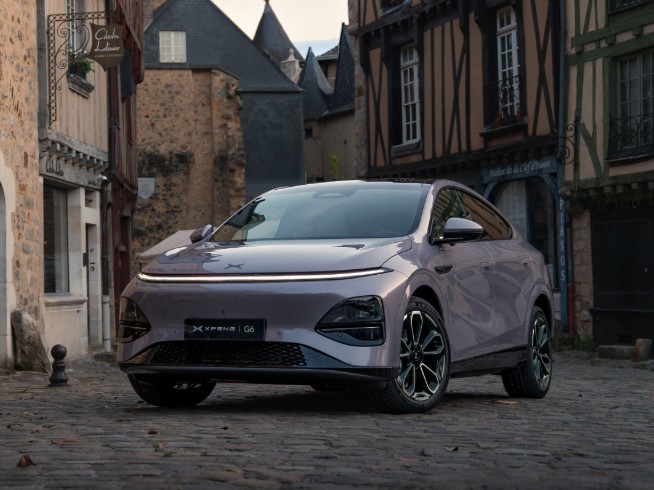
Yes. For a five-seat household, the G6 has the dimensions, battery capacity, luggage room, charging speed, and crash-test record needed for routine use. The current Australian-spec Long Range has an 80.8 kWh LFP battery, 525 km WLTP range, 571 L of boot space, and a 2,890 mm wheelbase. Its 451 kW maximum DC rate can take the battery from 10% to 80% in a claimed 12 minutes. In Euro NCAP's 2024 assessment, the G6 received five stars, scoring 88% for adult occupants and 85% for child occupants. Those figures make it a practical family SUV, provided its 4.75 m body suits the owner's parking space and local fast-charging access.
The proportions explain much of its usefulness. The G6 measures about 4,753 mm long and 1,920 mm wide, while the 2,890 mm wheelbase uses roughly 61% of the vehicle's overall length. A long distance between the axles gives the second row more usable legroom without requiring a vehicle longer than 5 metres. For parents fitting rear-facing child seats, that matters because bulky seats can take a noticeable amount of front-to-rear cabin space. Rear ISOFIX mounting points are standard on the current specification, and the flat EV floor also leaves the centre passenger with more foot space than a large transmission tunnel would allow.
Passenger space only solves half of the family-use question, so luggage capacity needs the same scrutiny. The G6 provides 571 L behind the rear seats and 1,374 L when they are folded, an increase of about 141%. The shape is useful for a folded stroller, weekly groceries, sports bags, or several medium suitcases without immediately sacrificing rear seating. A five-person household taking a weekend trip can therefore keep the second row available while carrying normal luggage, although families using three large child seats or frequently transporting five people with oversized gear may still need a larger SUV.
| Everyday-use figure | Current G6 specification | Why a family may notice it |
|---|---|---|
| Seats | 5 | Fits a typical two-adult, two- or three-child household |
| Boot | 571 L | Room for a stroller plus routine shopping |
| Seats folded | 1,374 L | About 141% more volume than standard boot mode |
| Wheelbase | 2,890 mm | Helps rear legroom and child-seat clearance |
| Turning radius | 5.8 m | Relevant in school and shopping-centre car parks |
| Payload, Long Range | 475 kg | Must cover passengers, bags, accessories and child seats |
Payload deserves more attention than boot volume because every person and bag counts toward the vehicle limit. The RWD Long Range is listed at 2,115 kg kerb weight and 2,590 kg gross vehicle mass, leaving 475 kg of stated payload. Four occupants averaging 70 kg use 280 kg, leaving about 195 kg for luggage and accessories. With five 70 kg occupants, the remaining allowance falls to around 125 kg. Families rarely calculate this for a normal school run, but it becomes relevant when the vehicle carries five adults, suitcases, sports equipment and additional accessories for a long 2026 holiday trip.
Range is less demanding in ordinary use. The current Australian RWD Long Range is rated at 525 km WLTP with its 80.8 kWh gross LFP battery, while the Standard Range is listed at 480 km on 18-inch wheels and 470 km on 20-inch wheels. Official consumption is 17.9 kWh/100 km for the Long Range, versus 16.6 kWh/100 km for the Standard Range on 18-inch wheels. A household covering 50 km per weekday would accumulate about 250 km before the weekend, less than 50% of the Long Range model's rated distance.
WLTP is a laboratory-based comparison figure, not a promise of 525 km in every condition. Motorway speed, low temperatures, cabin heating, air conditioning, passenger count, terrain and wheel size can all reduce distance between charges. XPENG states the same limitations on its official vehicle information.
That variation makes charging time more useful than quoting range alone. The RWD Long Range and AWD Performance models support up to 451 kW DC charging, while the Standard Range reaches 382 kW. XPENG states a 10% to 80% time of 12 minutes for current versions under suitable conditions. Moving from 10% to 80% adds 70 percentage points of battery state; on an 80.8 kWh pack, that represents roughly 56.6 kWh of nominal battery capacity. A charger must be powerful enough, and the battery must be at an appropriate temperature, so 451 kW should be read as a peak rather than a constant rate.
For home charging, the numbers are less dramatic but more relevant on most weekdays. The G6 supports 11 kW AC charging. XPENG lists about 9.2 hours from 5% to 100% for the 80.8 kWh versions and 7.3 hours for the 68.5 kWh Standard Range. A family arriving home at 40% would normally require much less than the full quoted period. Charging overnight also removes the need to visit a filling station during the working week, although apartment residents without a dedicated charger will depend much more heavily on local public infrastructure in 2026.
The XPENG electric suv also uses LFP battery chemistry across the current Australian G6 range. The Standard Range carries 68.5 kWh gross capacity, while Long Range and Performance versions use 80.8 kWh. LFP generally trades some energy density for good thermal stability and cycle durability, while battery temperature management still has a major role in charging performance and long-term condition. XPENG pairs the pack with an 800V electrical architecture and its XHP 3.0 thermal-management system, a combination intended to maintain high charging rates without relying on a very large battery.
Safety data gives parents something more measurable than a feature list. Euro NCAP tested the G6 in 2024 and awarded five stars. The scores were 88% for adult-occupant protection, 85% for child occupants, 81% for vulnerable road users and 75% for safety assistance. In the child assessment, performance based on six- and ten-year-old occupants received 24 out of 24 points across frontal and side-impact testing. Euro NCAP also recorded 14.7 out of 16 points for lateral impact and 3.8 out of 4 for rear-impact protection.
No crash result should be reduced to one five-star badge. Euro NCAP reported that the passenger compartment remained stable in its frontal-offset test and rated protection of all body regions as good in the side-barrier and pole tests. It also noted weak chest protection for the rear passenger in the full-width rigid-barrier test. That qualification matters for an EEAT-based assessment because an 88% adult score describes strong overall performance rather than perfect protection in every impact scenario.
The assistance equipment adds another layer for busy urban use. Current Australian specifications list adaptive cruise control, lane centring, forward-collision warning, autonomous emergency braking, blind-spot detection, door-opening warning, rear cross-traffic alert and a surround-view camera system. Euro NCAP recorded 8.9 out of 9 points for pedestrian AEB and 3 out of 3 for motorcyclist lane-support scenarios in its 2024 protocol. The systems remain driver assistance; XPENG states that the person at the wheel must monitor road, traffic and weather conditions and intervene when required.
Cabin equipment matters because school runs often involve repeated short trips rather than one long journey. Current specifications include a 10.25-inch digital instrument screen and 15.6-inch centre display, Apple CarPlay, Android Auto, Bluetooth phone access and over-the-air software updates. Depending on version, front seats include electric adjustment, heating and ventilation. Seven airbags are listed on the Australian configurator. A screen-led cabin will suit some households better than others, so checking climate controls, camera access and frequently used functions during a test drive is more informative than screen size alone.
Ride and parking behaviour are equally relevant after the technology becomes familiar. The G6 uses double-wishbone front suspension and a five-link independent rear arrangement on listed versions, while its 5.8 m turning radius helps with low-speed manoeuvres. At 1,920 mm wide, however, it is still a substantial vehicle. In an older garage with a 2,300 mm opening, only 380 mm of total clearance remains before allowing for mirrors, leaving around 190 mm per side if perfectly centred. Families moving from a narrower hatchback should measure their own garage rather than assuming a mid-size SUV will fit comfortably.
Performance varies more than a family actually needs. The Standard Range produces 185 kW and 440 Nm and reaches 100 km/h in 6.94 seconds; the RWD Long Range has 218 kW and 440 Nm and takes 6.7 seconds. The AWD Performance produces 358 kW and 660 Nm and completes the same run in 4.13 seconds. Its rated 510 km WLTP range is about 2.9% lower than the Long Range model's 525 km, while official energy consumption rises from 17.9 to 18.4 kWh/100 km.
For a household car, the RWD Long Range therefore has an easier numerical case than the Performance version unless all-wheel drive or stronger acceleration is specifically wanted. It keeps the 80.8 kWh battery, 451 kW peak DC charging and 12-minute 10–80% claim while offering the longest listed Australian range. The Standard Range remains practical for shorter weekly mileage and reduces battery capacity by about 15.2%, from 80.8 to 68.5 kWh, yet retains the same 571 L boot and five-seat cabin.
A family considering the G6 should test four ordinary situations rather than only taking a fast demonstration route: install the actual child seat, load the stroller, park in the home garage and visit a charger commonly used on longer trips. The paper figures are strong—525 km WLTP range, 571 L of luggage space, 475 kg payload, 12-minute claimed 10–80% charging and 2024 five-star Euro NCAP performance—but suitability depends on whether those dimensions and charging conditions match the household's real weekly routine.